Transforming textile waste into cement
PREVIOUSLY UNTHINKABLE SOLUTIONS. Transforming textile waste into cement opens up a world of possibilities. Scientists are now using textile ash to create extremely strong cement. Researchers in Lithuania are pioneering innovative methods to convert textile waste into energy and high-performance cement materials. This development presents sustainable solutions for two resource-intensive sectors: textiles and construction.
This breakthrough highlights the potential for recycling and repurposing materials in ways that can significantly benefit our environment.
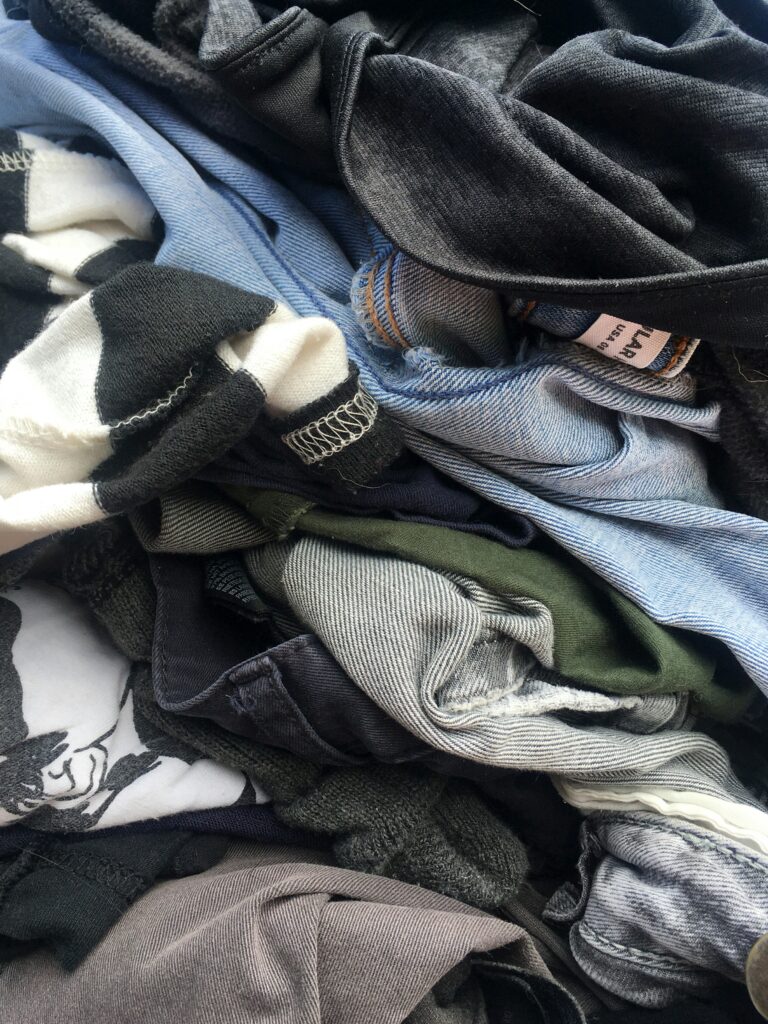
Current waste infrastructure is struggling to keep up with the 92 million tons being produced annually, with 132 million tonnes projected by 2030. Although new legislations are being implemented to reduce waste and move towards a circular economy, fast fashion continues to worsen the situation. While we work to cut overproduction and limit future waste, it’s important we find new ways to make use of old clothes.
A team of researchers at Kaunas University of Technology (KTU) are pursuing one innovative avenue: converting textile waste into high-performance concrete. Their goal is to turn waste into a valuable resource to create new opportunities for industry, reduce pollution, and support a circular economy. Because of the sizeable impact both the textile and construction sectors have on the planet, the researchers felt they were a prime place to start.
Current methods of recycling textiles are highly inefficient, with most recycling efforts repurposing materials into low-value items such as cleaning cloths, insulation, or padding. Sorting and processing synthetic textiles adds further complications in the recycling process because of the additives used in their production. For this reason, these textiles are usually incinerated or put in landfill.
When textile waste is heated at 300 degrees Celsius in an inert environment, carbon-rich granules with high calorific value are produced. These granules could offer a greener alternative to fossil fuel energy, but ash is also created in this process as an additional waste stream. This ash is what the team proposes can be used as a binder in cement, the key ingredient in concrete.
As Dr Raimonda Kubiliūtė of the KTU Faculty of Chemical Technology explained, “The cement industry, especially clinker firing processes in rotary kilns, contributes significantly to environmental pollution. This is why researchers are actively seeking ways to reduce the amount of conventional cement in cement-based mixtures by replacing it with alternative binders or fillers.”
The composition of the textile ash varies depending on the fuel, which impacts the ash’s ability to strengthen cement and increase its durability. The team at KTU found that adding 1.5 per cent of recycled polyester fibre, sourced from waste textiles, can increase the strength of concrete by 15-20 per cent. Through testing samples, the team estimated that textile ash could replace up to 7.5 per cent of conventional cement, the most carbon-intensive component of concrete. Another advantage is that adding the fibre significantly improves freeze-thaw resistance.
KTU’s solution could play a big role in reducing CO2 emissions during cement production and provide an environmentally friendly approach to textile waste management. Although this initiative is in its early stages, the team believes there is significant potential in developing alternative ingredients and fuels from textile waste.
For more information, check out the SPRINGWISE newsletter at springwise.com